
A fabric couch takes more daily abuse than almost anything else in your home. Crumbs, body oils, pet hair, and spills slowly dull the color and flatten the texture. Learning how to clean couch fabric the right way lets you bring it back without shrinking the covers, fading the dye, or leaving behind ugly water rings.
The secret is not a fancy product. It is knowing what your fabric can tolerate, using as little moisture as possible, and working in the right order.
Start by Reading the Cleaning Code on Your Couch
Before any cleaner touches your sofa, look for the care tag. It is usually stitched under a seat cushion or along the bottom of the frame. Most manufacturers print a single letter code on it, and that letter tells you exactly which cleaning method is safe. If you want a deeper explanation of each one, our guide to upholstery cleaning codes breaks them down in detail.
A “W” code means the fabric can handle water-based cleaners, so a mild soap solution is fine. An “S” code means solvent only, and water can leave stains or rings, which is common on many microfiber couches. A “WS” or “S/W” code means either method works, while an “X” code means vacuum only and anything wet should be left to a professional. If the tag is missing, treat the fabric as delicate and test every product in a hidden spot first.
Supplies You Need to Clean Couch Fabric
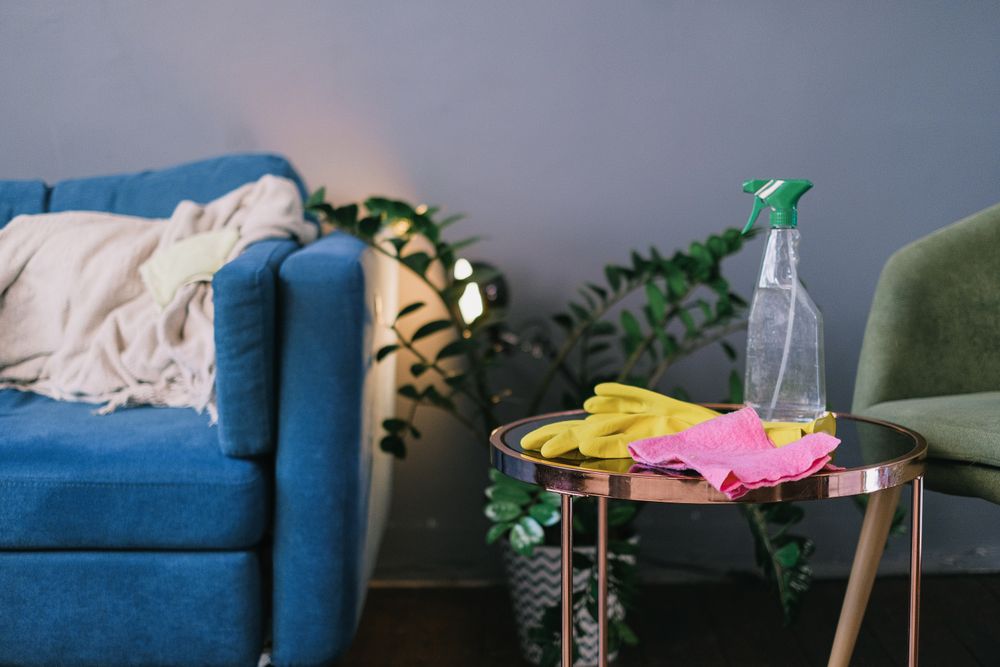
You do not need specialty equipment to clean most fabric couches at home. A vacuum with an upholstery attachment, a few white microfiber cloths, a soft-bristle brush, a spray bottle, and a bucket will cover nearly every job. For the cleaning solution, mild clear dish soap and warm water work well on water-safe fabrics, while isopropyl rubbing alcohol is a reliable choice for solvent-safe fabrics.
Use distilled water when you can, since tap water minerals can dry into faint rings, and stick to white cloths that will not transfer dye.
Step 1: Vacuum Every Surface Thoroughly
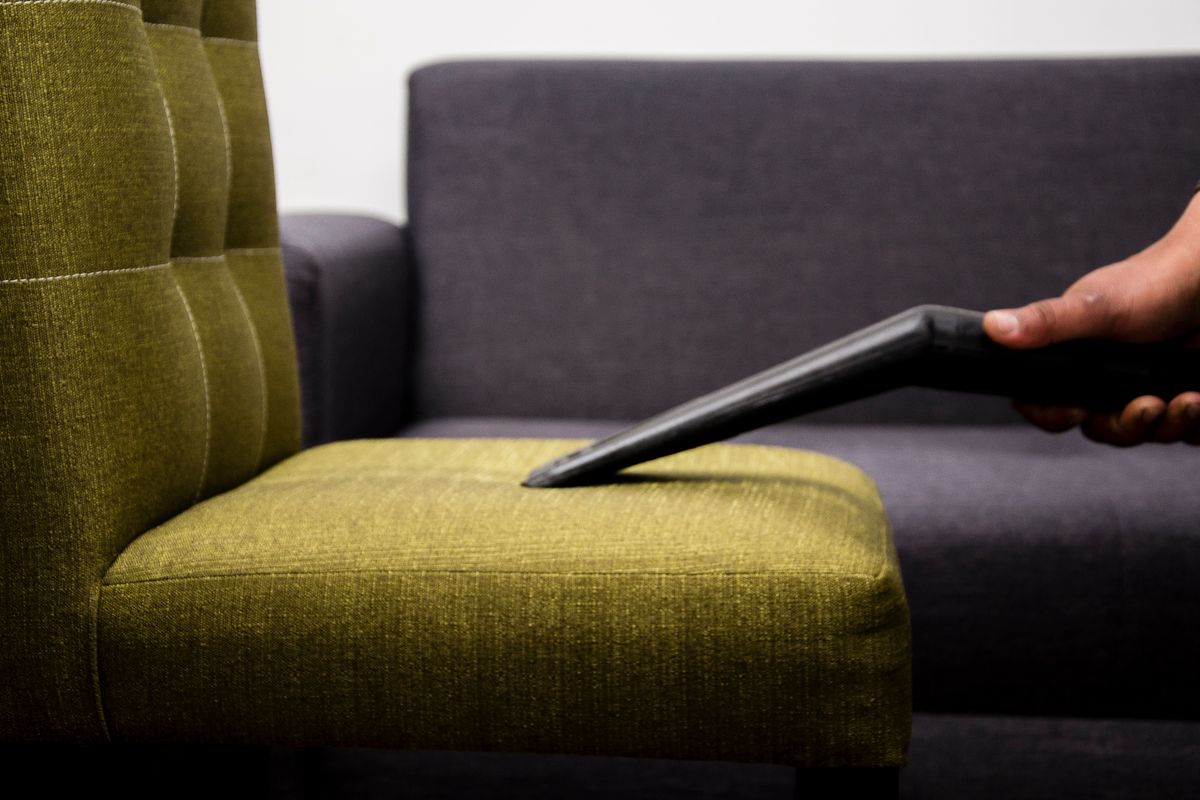
Vacuuming is the step most people rush, yet it matters more than any spray. If you add liquid before removing dry soil, that grit turns into muddy residue deep in the cushion.
Remove the cushions and vacuum the deck underneath, the crevices along the arms, and the seams where crumbs hide. Then go over the cushions, back, and arms with the upholstery tool using slow, overlapping strokes. If you have pets, a rubber glove pulls up stubborn hair the vacuum misses.
Step 2: Spot Test Your Cleaning Solution
Mix your solution and apply a small amount to a hidden area, such as the back of the skirt or the underside of a cushion. Blot it with a white cloth, then let it dry completely. If the color bleeds onto the cloth, the texture changes, or a ring forms, stop and choose a gentler method.
For water-safe fabric, combine about one teaspoon of clear dish soap with two cups of warm distilled water. For solvent-safe fabric, pour rubbing alcohol straight into a spray bottle. It evaporates fast, so it rarely leaves marks.
Step 3: Treat Stains Before the General Clean
Spots deserve attention before you clean the whole surface. Lightly mist or dab the solution onto the stain, wait a minute or two, and blot from the outside edge toward the center. That inward motion keeps the stain from spreading into a larger patch. Never scrub, since rubbing frays fibers.
Keep blotting with a clean section of cloth until no more color transfers. For marks that have been there for months, our guide on getting old stains out of a couch covers stronger techniques. Ink is a special case, and you can find targeted steps in our article on removing pen ink from a couch.
Step 4: Clean the Fabric Section by Section
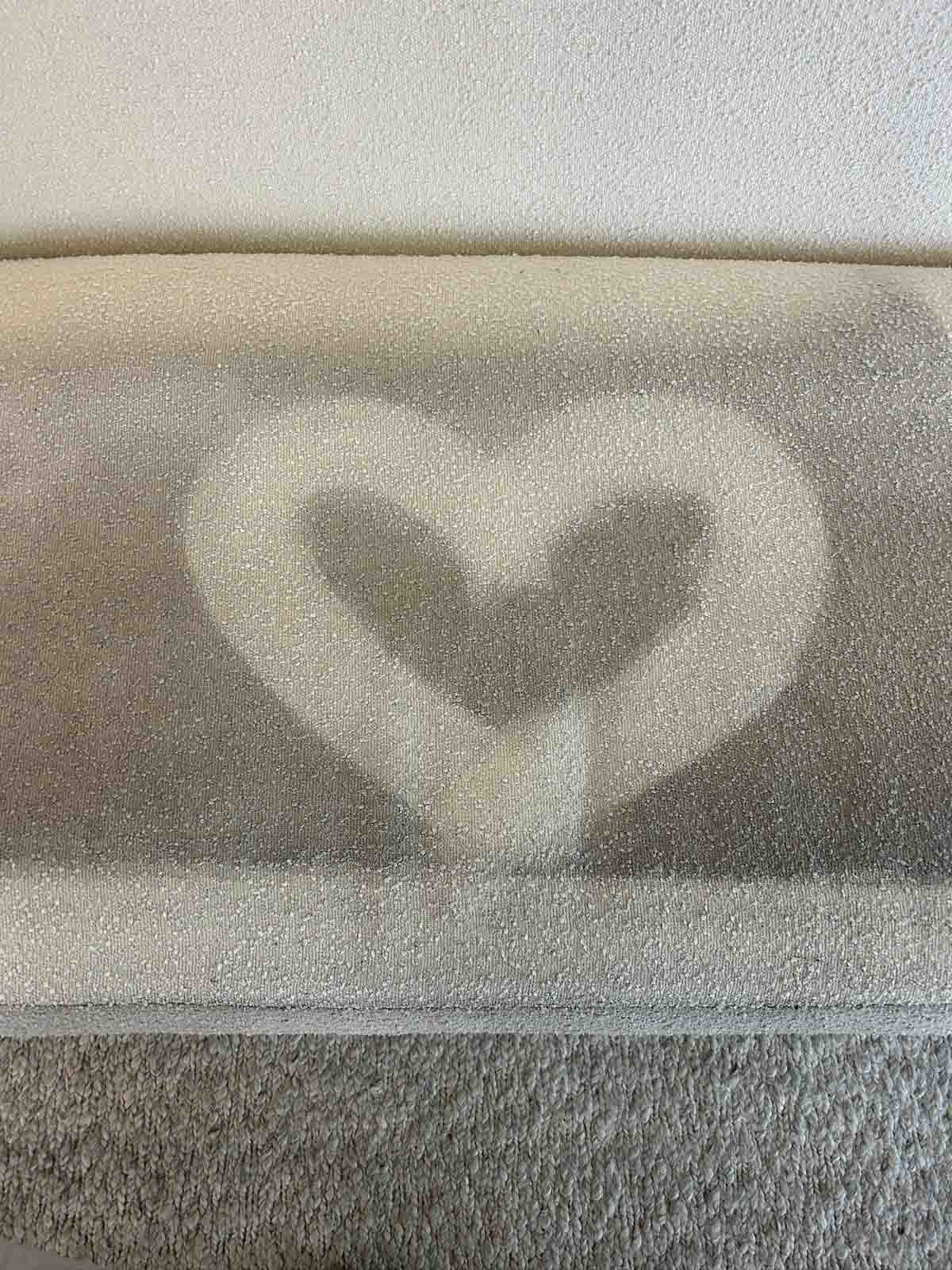
Once the spots are handled, clean the rest of the couch so the color and texture stay even. Work in small sections roughly the size of a sheet of paper. Dampen a microfiber cloth with your solution, wring it until it is barely moist, and wipe in the direction of the nap. Follow immediately with a second cloth dampened with plain distilled water to lift away any soap residue.
Clean the entire panel from seam to seam rather than stopping in the middle. Cleaning only one patch can leave a visible clean spot that looks like a stain once it dries. Our article on cleaning upholstery without leaving water stains explains this edge effect in more depth.
Step 5: Brush and Restore the Texture
When fabric dries in a flattened state, it can look patchy or matted. While the surface is still slightly damp, run a soft-bristle brush gently in one direction to lift the fibers. Delicate fabrics like velvet upholstery and natural weaves such as linen couches need an even lighter hand, because they bruise and wrinkle easily.
Step 6: Deodorize and Dry Completely
Lingering odors usually live inside the cushion foam, not just on the surface. After the fabric is dry to the touch, sprinkle a thin layer of baking soda over the seats and let it sit for at least thirty minutes, or overnight for stronger smells, then vacuum it up. For persistent odor problems, our guide on getting smells out of a fabric couch offers more solutions.
Drying is where many home cleaning jobs go wrong. Open windows or point a fan at the couch to keep air moving. Stand cushions on their edges so both sides can breathe. Avoid hair dryers and direct heat, which can shrink covers and set any remaining stains. If you are unsure about timing, read how long it takes for a couch to dry after cleaning.
Mistakes That Damage Couch Fabric
The most common mistake is over-wetting. When liquid soaks through to the foam, it takes days to dry and can lead to mildew, musty odors, and brown wicking stains that rise to the surface. Harsh products like bleach can also strip color and weaken fibers.
Machine washing zippered covers is also risky unless the manufacturer allows it, because many shrink and never fit again. A steam cleaner is not right for every sofa either. Before you rent one, find out whether you can steam clean a couch made from your type of fabric.
When to Call a Professional Upholstery Cleaner
X-coded fabrics, delicate silk or vintage pieces, large set-in stains, urine that has reached the foam, and couches that smell musty after cleaning all are better left to experts. Technicians use controlled moisture and strong extraction to pull soil out of the padding itself.
If your sofa needs more than a DIY refresh, our team offers professional couch cleaning and upholstery cleaning services that are safe for every fabric type. You are always welcome to contact us for honest advice about your couch.
Final Thoughts on How to Clean Couch Fabric
Knowing how to clean couch fabric comes down to a few simple habits. Check the cleaning code, vacuum thoroughly, test before you treat, use as little moisture as possible, and give the cushions plenty of airflow to dry. Follow these steps consistently and your couch will look brighter, feel softer, and last for many more years.