
Your couch is where you relax, eat snacks, play with the kids, and let the dog curl up after a walk. All that living leaves dust, oils, crumbs, and odors behind, even when the sofa looks fine at first glance. The good news is that you do not need expensive machines to keep it fresh. Once you know how to clean couches at home, a simple routine with everyday supplies can make your sofa look and smell noticeably better.
This guide gives you a practical, room-ready routine that works for most sofas, plus tips for different materials and the mistakes that cause more harm than good.
Why Regular Couch Cleaning Matters
Upholstery acts like a giant filter. It traps skin cells, pet dander, pollen, and fine dust every time someone sits down. Left alone, that debris wears down fibers, dulls colors, and creates a comfortable home for dust mites in your couch. Cleaning on a regular schedule protects your investment and keeps the air in your living room cleaner.
Check the Care Tag Before You Begin
Every couch is built a little differently, so the first step is always the manufacturer’s tag. The letter code on it tells you whether the fabric accepts water, solvent, both, or only vacuuming. Skipping this step is the fastest way to leave rings or faded patches. Our detailed guide to upholstery cleaning codes explains what each letter means and which cleaners are safe.
Household Supplies That Work
Most of what you need is already in your home. A vacuum with a brush attachment, white microfiber cloths, a soft-bristle brush, and a spray bottle form the core kit. For solutions, clear dish soap mixed with warm water handles most water-safe fabrics, while rubbing alcohol suits solvent-safe synthetics. Baking soda is the best inexpensive deodorizer, and white vinegar diluted with an equal amount of water can help break down light odors on fabrics that tolerate moisture.
A Simple Routine for Cleaning Couches at Home
Clear and Vacuum the Couch
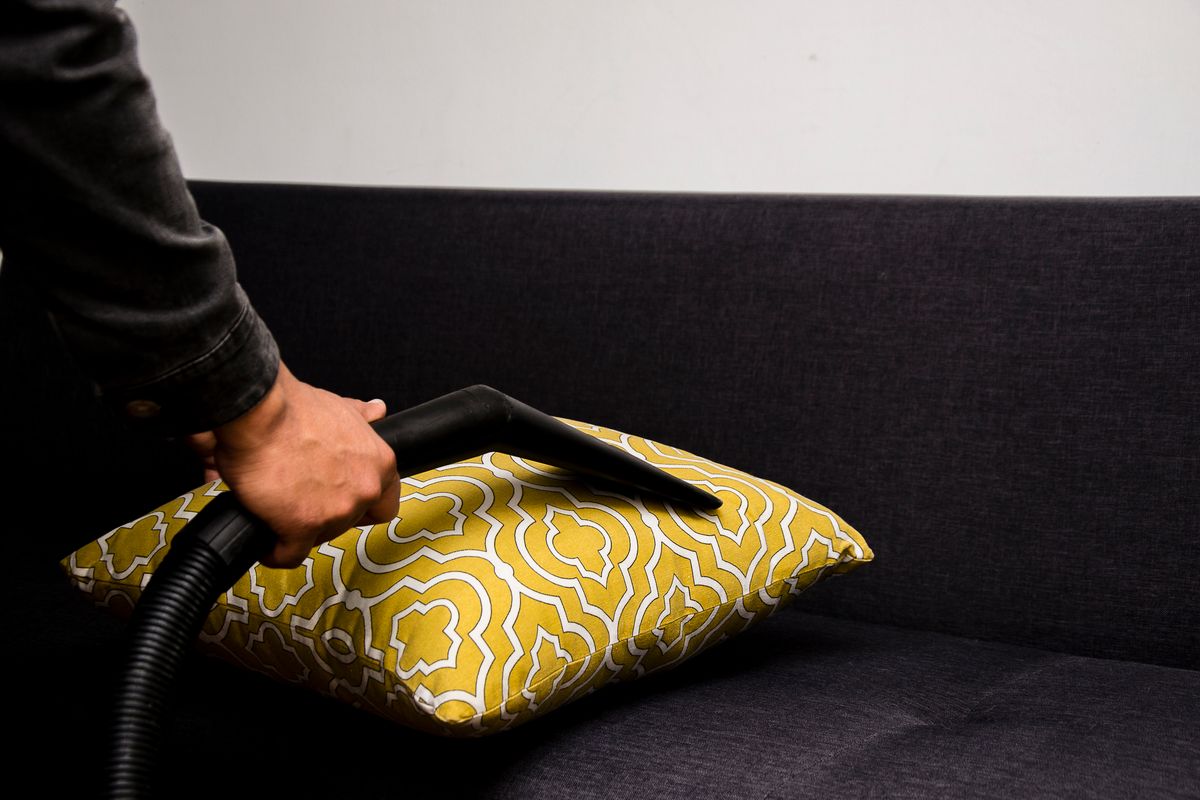
Remove throw pillows, blankets, and loose cushions. Shake the cushions outdoors if possible, then vacuum the base, the gaps along the arms, and the back. Go slowly over the cushion tops and sides with the upholstery tool, and use a crevice tool in the seams where crumbs collect. A thorough vacuum removes the gritty soil that would otherwise turn into muddy residue when you add any liquid.
Spot Clean Stains Gently
Apply a small amount of your chosen cleaner to a cloth, not directly onto the couch, and blot the stain from the outside in. Keep switching to a clean part of the cloth until nothing more lifts. Patience beats pressure here, since scrubbing spreads stains and roughens the fabric. Always try the solution on a hidden area first. If a mark refuses to budge, our tips for removing old stains from a couch may help.
Wipe Down the Whole Surface
After spot treatment, give the entire couch a light, even cleaning so no single area looks brighter than the rest. Use a barely damp cloth and work panel by panel, then follow with a cloth moistened in plain water to remove soap residue. For a full breakdown of this method on upholstery, read our guide on how to clean couch fabric safely.
Refresh the Cushions
Cushions take the most wear, so give them extra attention. Flip and rotate them every few weeks to spread out the use, and check whether the covers are removable before washing anything. Many covers are not designed for machines and can shrink. Our guide to cleaning couch cushions covers both removable and fixed cover options.
Deodorize and Let It Dry
Once the fabric is dry to the touch, sprinkle baking soda evenly across the seats and backrest. Leave it for at least an hour, or overnight if odors are strong, then vacuum it away. Keep a fan running and windows open while the couch dries, and avoid sitting on damp cushions, which can flatten the fibers and press moisture deeper into the foam.
Cleaning Different Types of Couches
Not every sofa responds the same way, so adjust the routine to your material. Microfiber is durable but often marks with water, which is why rubbing alcohol and a quick brushing work better. You can learn the full process in our guide on how to clean a microfiber couch.
Linen and cotton are natural fibers that can shrink and wrinkle, so they need minimal moisture and gentle handling. Leather should never be soaked; a damp cloth followed by a quality leather conditioner keeps it supple and prevents cracking. Velvet needs a soft brush and very light pressure so the pile does not crush or show marks.
Handling Odors From Pets and Daily Life
Pet odors are one of the most common reasons homeowners want to clean their couches. Regular vacuuming removes hair and dander, but smells often come from oils and accidents that reach the padding. Enzyme-based cleaners are the most effective choice for organic odors because they break down the source instead of masking it. For step-by-step help, see our article on getting dog smell out of a couch.

Common Mistakes to Avoid
Using too much water is the biggest mistake people make. When moisture sinks into the foam, it can cause mildew, sour smells, and brown marks that wick up as the fabric dries. Harsh chemicals such as bleach or strong degreasers can strip dye and weaken fibers. Rubbing stains, using colored towels, and drying cushions with a heater or hair dryer also cause lasting damage.
It is also tempting to grab a carpet machine or steamer, but not every fabric handles heat and heavy moisture. Before trying one, find out whether you can steam clean a couch like yours.
How Often to Clean Your Couch
Vacuum your couch at least once a week and blot spills right away. A general wipe down every month or two keeps buildup under control, while a deeper clean every six to twelve months suits most households. Homes with pets, young children, or allergy sufferers usually need a shorter schedule. Our guide on how often to clean upholstery offers more detail.
When Professional Cleaning Makes Sense
Home cleaning handles routine care well, but some problems need professional equipment. Deep set stains, urine that has soaked into the cushion, lingering musty smells, X-coded fabrics, and delicate or antique pieces are best handled by trained technicians who can extract soil from deep inside the padding.
If your sofa needs more than a DIY refresh, our professional couch cleaning service restores fabric safely and dries quickly. You can also explore our full upholstery cleaning options or get in touch with any questions.
Final Thoughts on How to Clean Couches at Home
Learning how to clean couches at home is mostly about consistency. Check the care tag, vacuum often, treat stains gently, use as little moisture as possible, and let everything dry fully. With this simple routine, your sofa will stay fresh, comfortable, and inviting for years to come.